Have you ever wondered what the word “tennis” really means in English? Whether you’re a player, a fan, or just curious, understanding the meaning behind the name adds a new layer to the game.
Tennis isn’t just about hitting a ball over a net—it carries a rich history and an interesting story that many don’t know. You’ll discover where the word “tennis” comes from, what it truly means, and why it matters to the sport you love or want to learn about.
Keep reading, and you’ll see tennis in a whole new light.
Origin Of Tennis
Tennis means a sport where players hit a ball over a net using rackets. The word comes from the French “tenez,” meaning “take” or “receive. ” It began as an indoor game called jeu de paume, played by hitting the ball with the hand.
Tennis has a rich history that dates back centuries. Its roots trace to a French game called “jeu de paume,” meaning “game of the palm.”
Players originally hit the ball with their hands, not racquets. This early form was popular among monks and knights in medieval France.
French Connection
The name “tennis” likely comes from the French word “tenez.” It means “take!” or “receive!”
Players shouted “tenez!” before serving the ball to their opponent. This call was a key part of the game’s early play.
English speakers adopted the game and the term. Over time, “tenez” evolved into the word “tennis.”
From Real Tennis To Lawn Tennis
The original game played indoors was called Real Tennis or Court Tennis. It was played in royal courts.
In the 19th century, Lawn Tennis emerged. It was played outdoors on grass courts, making it more accessible.
Modern tennis developed from these earlier forms. The International Tennis Federation now governs the sport worldwide.
Meaning Of Tennis
Tennis is a popular sport played by millions worldwide. The word “tennis” has a rich history and unique meaning in English. Understanding its origin helps appreciate the game more deeply.
The term “tennis” comes from an old French word. It connects to the way the game was played long ago. This background shows how language and sport evolve together.
Origin Of The Word Tennis
The word “tennis” likely comes from the French word “tenez.” It means “take” or “receive.” Players shouted this word to alert their opponents before serving. This call was part of an older game called “jeu de paume.”
The Ancient Game: Jeu De Paume
Jeu de paume was a medieval game played with the hand. It was popular in France and England. Players hit the ball against walls indoors. This game is the ancestor of modern tennis.
Modern Tennis And Its Name
Modern tennis is sometimes called “lawn tennis.” This name highlights that it is played outdoors on grass. The official name remains simply “tennis.” The International Tennis Federation oversees the rules worldwide.
Key Terms Related To Tennis
- Tennis: The current and common name for the sport.
- Lawn Tennis: The original term for tennis played on grass courts.
- Real Tennis: An older indoor version of the game, also called Court or Royal Tennis.
French Roots
Tennis comes from the French word “tenez,” meaning “take” or “receive. ” Players shouted this to signal the serve. The term evolved into the sport’s English name over time.
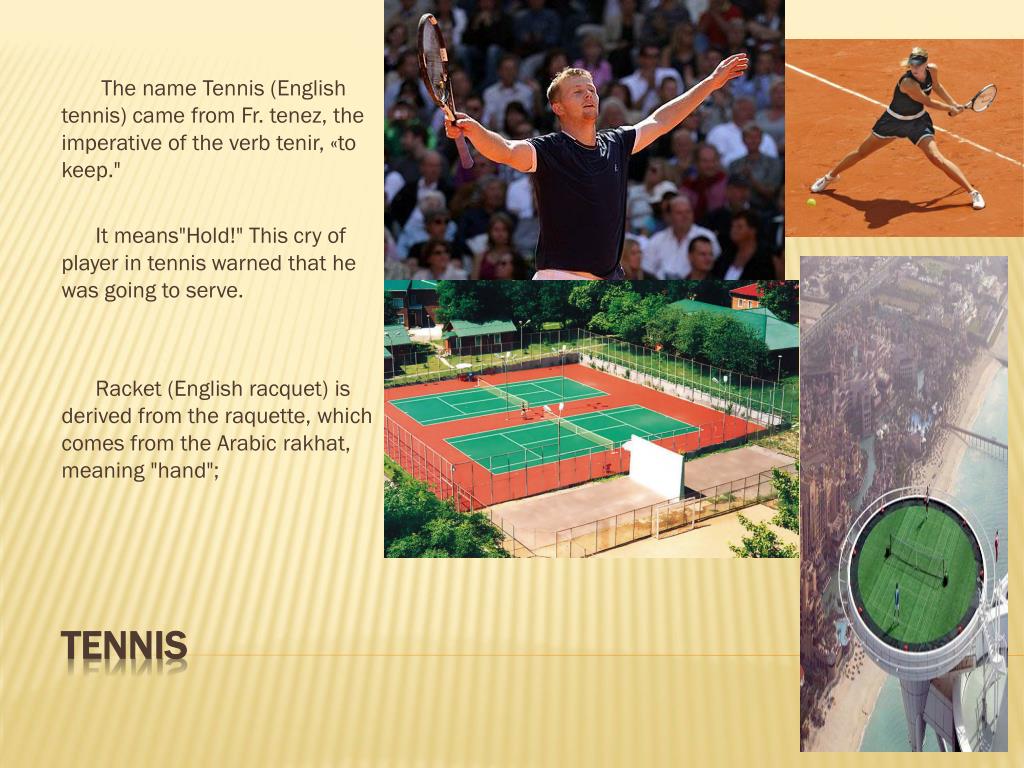
The word “tennis” has strong French origins. It comes from the French word tenez, which means “take” or “receive.” This was a call from the server to the opponent before serving the ball. The term was used in an early game called jeu de paume, which means “game of the palm.”
Jeu de paume was played by hitting the ball with the hand. It was popular among French monks and knights in medieval times. This game is the ancestor of modern tennis. Players used to shout tenez! to warn the other player to be ready.
The Call “tenez!”
In the old French game, the server called out tenez! before serving. It meant “take it” or “receive it.” This helped the opponent prepare to hit the ball back. The word stuck and evolved into the name of the sport itself.
English speakers adopted the game and the call. Over time, tenez turned into “tennis.” The original meaning stayed alive in the name, even as the game changed.
From Jeu De Paume To Modern Tennis
The game changed from hitting the ball with the hand to using racquets. It moved outdoors and became known as Lawn Tennis. The French word remained part of its identity. This shows the deep French influence on tennis today.
Today, the official name is simply “Tennis.” The International Tennis Federation (ITF) governs the sport worldwide. Yet, the French roots in the name remind us of the game’s long history.
The Call ‘tenez’
The call “Tenez” holds a special place in tennis history. This word comes from French. It means “Take!” or “Receive!” in English. Players said it before serving the ball.
In the early days of the game, “Tenez” was a signal. The server used it to warn the opponent the ball was coming. The word helped players get ready to play.
The Origin Of The Call “tenez”
“Tenez” comes from the old French game called jeu de paume. This game was played indoors using the palm of the hand to hit the ball. Players shouted “Tenez” as a way to start the point.
How “tenez” Became “tennis”
English speakers adopted the game and its terms. Over time, “Tenez” changed in sound and spelling. This word slowly became “tennis,” the name of the sport today.
The Role Of “tenez” In Modern Tennis
Though players no longer say “Tenez,” the call shaped tennis traditions. It reminds us of tennis’ French roots. The spirit of fair play and readiness lives on in the game.
Jeu De Paume Connection
The word “tennis” links deeply to the French game called jeu de paume. This old game was played by hitting a ball with the palm of the hand. It was popular in France before modern tennis existed.
Players in jeu de paume shouted “tenez!” before serving. This French word means “take!” or “receive!” It was a call to the opponent to get ready for the ball. English speakers adopted this call and the game itself.
Over time, “tenez” changed in English to “tennis.” The name stuck even after the game evolved. Modern tennis uses racquets and is usually played outdoors on grass or hard courts.
Origins Of Jeu De Paume
Jeu de paume started in medieval France. Monks and knights played it indoors, using their hands to hit the ball. It was a popular pastime in castles and courts.
The game had simple rules but required skill and agility. It was the foundation for the sport we now know as tennis.
The Meaning Behind “tenez”
“Tenez” was the important word in jeu de paume. It served as a warning or signal before the serve. The server called out “tenez!” to alert the opponent.
This shout helped players prepare for the fast-moving ball. The word’s meaning—”take” or “receive”—perfectly described the action needed next.
Evolution From Jeu De Paume To Tennis
As the game spread to England, it changed form. Players began using racquets instead of hands. The game moved outdoors to large grass courts.
The name “tennis” came from the original French call. It became the official term for the sport in English.
Today’s tennis keeps the spirit of jeu de paume, but with new rules and equipment.
Evolution Of The Name
The name “tennis” has an interesting history that traces back centuries. It did not always mean the sport we know today. The evolution of the name shows how language and culture shaped its meaning.
Originally, the game started in France and England as an indoor sport. Players used their hands to hit the ball before racquets were introduced. The name comes from a word players shouted during the game.
French Origins Of The Word
The word “tennis” likely comes from the French word tenez. It means “take” or “receive.” Players called this out to warn their opponents before serving the ball. This shout was common in the early game called jeu de paume, meaning “game of the palm.”
From “tenez” To Tennis
English speakers adopted the French call “tenez” during the Middle Ages. Over time, the word changed in pronunciation and spelling. It became “tennis,” the name for the modern sport. The term stuck even after the game moved outdoors with racquets.
Distinguishing Lawn Tennis And Real Tennis
In the 19th century, the sport split into two forms. Real tennis was the original indoor game. Lawn tennis was the new outdoor version played on grass. “Lawn tennis” was used to tell them apart. Today, we simply call it “tennis.”
The Role Of The International Tennis Federation
The International Tennis Federation (ITF) oversees the sport worldwide. It sets the official rules and standards. The ITF uses the name “tennis” for the modern game. The word connects the sport to its rich history and global presence.
Real Tennis Explained
Real tennis is the original form of the sport we call tennis today. It started in the medieval period and was played indoors. The game uses a different court and set of rules than modern tennis.
Players hit the ball off walls and roof surfaces. This makes the game unique and challenging. Real tennis is also called court tennis or royal tennis in some countries.
History Of Real Tennis
Real tennis dates back to the 12th century. It was popular among French monks and English nobility. The game evolved from hitting the ball with the hand to using rackets.
The word “tennis” comes from the French word “tenez,” which means “take” or “receive.” Players shouted this word before serving the ball.
How Real Tennis Is Played
The court for real tennis is very different from a modern tennis court. It has walls, sloping roofs, and galleries. Players can hit the ball off these surfaces to score points.
The ball is heavier and less bouncy than in lawn tennis. Rackets have a smaller head and are made of wood. Matches can last for hours because of the complex rules.
Differences From Modern Tennis
Modern tennis is called lawn tennis because it is played outdoors on grass or hard courts. Real tennis is played indoors on a specialized court. The scoring system in real tennis is more complex.
Real tennis uses unique rules for serving and returning the ball. The walls and openings in the court add extra strategy. Modern tennis focuses more on speed and power.

Credit: en.wikipedia.org
Lawn Tennis Introduction
Tennis means a sport where players hit a ball over a net using rackets. The word comes from the French “tenez,” meaning “take” or “receive. ” This call was used by servers in the old game before modern tennis began.
Lawn Tennis Origins
Lawn tennis is the modern form of tennis played outdoors on grass courts. It began in the late 19th century in England. The sport evolved from an older game called real tennis, which was played indoors.
Players use rackets to hit a felt-covered ball over a net. The goal is to score points by making the ball land inside the opponent’s court.
Difference Between Lawn Tennis And Real Tennis
Real tennis is the original form, played indoors with different rules. Lawn tennis introduced a simpler, faster style on grass. This made the game more popular worldwide.
Lawn tennis courts are rectangular and have a net in the middle. Real tennis courts have walls and complex layouts. The change helped lawn tennis become the sport we know today.
How Lawn Tennis Got Its Name
The term “lawn tennis” highlights the grass surface where the game is played. Early matches took place on lawns in England, which gave the sport its name.
Over time, “lawn tennis” shortened to just “tennis” in everyday speech. The name still reflects its outdoor origins and connection to the grass courts.
Modern Tennis
Modern tennis is a popular sport played worldwide on various surfaces. It involves hitting a ball over a net using a racquet. Players compete in singles or doubles matches. The sport combines skill, speed, and strategy.
Modern tennis evolved from older forms like real tennis and lawn tennis. It gained global recognition in the late 19th century. Today, it is governed by the International Tennis Federation (ITF).
Origin Of Modern Tennis
Modern tennis began in England during the 1870s. It was called lawn tennis because it was played on grass. The game quickly spread to other countries. Rules were standardized to make competition fair.
Equipment Used In Modern Tennis
Players use lightweight racquets made from materials like graphite. Tennis balls are hollow and covered with felt. Courts come in three main types: grass, clay, and hard. Each surface affects how the ball moves.
Basic Rules Of Modern Tennis
The objective is to hit the ball over the net into the opponent’s court. Players score points by winning rallies. Matches are divided into sets and games. A player must win six games to win a set.
Global Popularity And Competitions
Tennis is played professionally worldwide. Major tournaments include the Grand Slams: Wimbledon, the US Open, the French Open, and the Australian Open. These events attract millions of fans and top players.
International Tennis Federation
The International Tennis Federation (ITF) is the global organization that governs tennis.
It sets the official rules and standards for the sport worldwide.
The ITF ensures fair play and promotes tennis in all countries.
Role Of The International Tennis Federation
The ITF organizes international tournaments and manages player rankings.
It also oversees junior, senior, and wheelchair tennis competitions.
The federation helps develop tennis through coaching and training programs.
History And Formation
The ITF was founded in 1913 to unify tennis rules globally.
It brought together different national tennis bodies under one authority.
Since then, the ITF has grown to include over 200 member nations.
How The Itf Affects Tennis Today
The ITF controls the rules used in Grand Slam tournaments.
It works closely with other tennis organizations like ATP and WTA.
The federation promotes tennis as a sport accessible to all ages.
Professional Tours
Professional tours are the highest level of tennis competition worldwide. They feature top-ranked players competing in tournaments across many countries. These tours shape the careers of players and influence tennis fans globally.
Players earn ranking points and prize money on these tours. The points help determine their world rankings, which affect tournament entries and seedings. The tours also showcase the sport’s best talent and most exciting matches.
Atp Tour
The ATP Tour is the main professional tour for male tennis players. It includes events like Masters 1000, 500, and 250 tournaments. The ATP Finals is the year-end event for the top eight players.
Wta Tour
The WTA Tour is the women’s professional tennis circuit. It features Premier and International tournaments. The WTA Finals is the season-ending championship for the top-ranked women.
Grand Slam Tournaments
Grand Slam events are the most prestigious tennis tournaments. They include the Australian Open, French Open, Wimbledon, and US Open. Both ATP and WTA players compete in these major events.
Challenger And Itf Tours
Challenger and ITF tours serve as stepping stones for players aiming for the main tours. They offer fewer points and prize money but help players improve their rankings. Many stars start their careers here.
Types Of Tennis Courts
Tennis courts come in different types. Each type affects how the ball moves and how players play.
Knowing the types of courts helps players prepare better for matches. Courts vary by surface material and speed.
Clay Courts
Clay courts are made from crushed shale, stone, or brick. These courts slow down the ball. They create longer rallies and more strategic play. Players often slide on clay to reach balls. Famous tournaments like the French Open use clay courts.
Grass Courts
Grass courts are the fastest type. They have a natural grass surface. The ball bounces low and fast. Grass courts favor players with strong serve and volley skills. Wimbledon is the most famous tournament played on grass.
Hard Courts
Hard courts are made from asphalt or concrete with an acrylic top layer. They offer a medium speed for the ball. Hard courts provide a consistent bounce. Many professional tournaments, like the US Open, use hard courts. They are common in public tennis facilities.
Carpet Courts
Carpet courts are indoor surfaces made of artificial turf or textile. They are fast and smooth. These courts are less common today but still used in some indoor venues. Carpet courts can be tricky due to quick ball speed and low bounce.
Basic Rules
Tennis is a sport where players hit a ball over a net using rackets. Basic rules include serving the ball and scoring points by making the ball land in the opponent’s court. Players must follow these simple steps to play the game correctly.
Tennis is a sport played between two players or two teams of two players. The goal is to hit the ball over the net into the opponent’s court. Players score points by making the ball land in the opponent’s court without being returned.
The game starts with a serve from behind the baseline. The server must hit the ball diagonally into the service box. The opponent tries to return the ball before it bounces twice.
Players take turns hitting the ball until one fails to return it properly. Points are counted in a unique way, starting from love (zero), then 15, 30, and 40. Winning four points with a two-point lead wins the game.
Each tennis match consists of sets. A player wins a set by winning at least six games with a two-game lead. If the score reaches 6-6, a tiebreaker is played to decide the set.
The tiebreaker is usually played to 7 points. The first to reach 7 points with a two-point lead wins the tiebreak and the set. Matches are often best of three or five sets.
Serving Rules
The server stands behind the baseline on the right side at the start of each game. The serve must cross diagonally into the opponent’s service box. A serve landing outside is a fault.
Two faults in a row result in the opponent winning the point. The server switches sides after each point. Serving alternates between players after each game.
Faults And Lets
A fault occurs if the ball is served into the wrong area or does not clear the net. Two faults in a row cause the server to lose the point.
A let happens if the serve touches the net but still lands in the correct service box. The serve is replayed without penalty.
Winning The Match
The player who wins the required number of sets first wins the match. Most matches use best of three sets, but some use best of five sets.
Each set is made up of games, and each game is made up of points. The player must win by two clear points, games, or sets to secure victory.

Credit: www.britannica.com
Equipment Used
Tennis requires specific equipment to play properly and safely. Each piece helps players perform well and enjoy the sport. Understanding the basic equipment gives insight into the game’s meaning and nature.
Racquets
Racquets are the main tools used to hit the ball. They have a handle and a round frame with strings. Racquets come in different sizes and weights. Beginners usually choose lighter racquets for better control.
Tennis Balls
Tennis balls are small, hollow, and covered with felt. They are bright yellow to improve visibility. The balls bounce on the court and react to hits from the racquet. Proper balls keep the game fair and fun.
Tennis Court
The court is the playing area marked with lines. It can be made of grass, clay, or hard materials. The court has a net in the middle that divides the players. The size and layout of the court follow official rules.
Clothing And Shoes
Players wear comfortable clothes to move easily. Tennis shoes have special soles to prevent slipping. Good shoes support quick stops and starts. Proper gear helps prevent injuries during play.
Player Roles
Understanding player roles in tennis helps explain how the sport works. Each player has a specific part to play, whether in singles or doubles matches. Roles influence strategies and how players interact on the court.
Server
The server starts each point by hitting the ball into the opponent’s service box. This role requires precision and power to gain an advantage. A strong serve can make it hard for the opponent to return.
Receiver
The receiver waits to return the serve. Good reflexes and anticipation are key for this role. A successful return can shift momentum and pressure the server.
Baseline Player
Baseline players stay near the back of the court. They focus on long rallies and consistent shots. Their role demands stamina and careful shot placement.
Net Player
Net players move close to the net to hit volleys. Quick reactions and good hand-eye coordination help win points fast. This role is common in doubles matches.
Doubles Partner
In doubles, each player supports the other. Communication and teamwork are vital here. Partners cover different court areas to defend and attack effectively.
Credit: www.slideserve.com
Scoring System
The scoring system in tennis is unique and can seem complex at first. It uses special terms and counts points differently than most sports. Understanding this system helps you follow the game better and enjoy the matches more.
Each tennis match is divided into points, games, and sets. Players compete to win points, which then add up to win games. Winning games leads to winning sets, and winning a certain number of sets means winning the match.
How Points Are Counted
Points in tennis do not follow normal numbers. They go 0, 15, 30, 40, and then game point. The score starts at “love” which means zero. When a player wins one point, the score moves to 15. Two points make it 30. Three points make it 40.
What Is Deuce?
Deuce happens when both players have 40 points. It means the score is tied. To win from deuce, a player must score two points in a row. The first point after deuce is called “advantage.” If that player wins the next point, they win the game. If not, the score returns to deuce.
Winning A Game
To win a game, a player must reach at least 40 points and be two points ahead. If the score is tied at 40, the players continue playing until one gets the advantage and then wins the next point. This system creates exciting and long games.
Sets And Match Victory
A set is won by the first player to win six games. The player must lead by at least two games. If the score reaches 6-6, a tie-break is played. The match winner is the player who wins the required number of sets, usually two or three.
Tennis Terminology
Tennis has a special set of words that players and fans use. These terms help explain the rules and parts of the sport. Understanding tennis words makes watching or playing easier and more fun.
Some words come from old French, while others describe the moves and scoring. Knowing these terms can improve your knowledge of tennis quickly.
Basic Tennis Terms
Serve: The first hit that starts a point. It must go over the net and land in the opponent’s service box.
Rally: When players hit the ball back and forth before a point ends.
Fault: A serve that lands outside the correct area or does not clear the net. Two faults mean the opponent wins the point.
Scoring Terms
Love: Means zero points. For example, 15-love means 15 to 0.
15, 30, 40: The points counted during a game. After 40 comes the game point.
Deuce: When both players have 40 points, meaning a tie that must be broken by winning two points in a row.
Court Positions
Baseline: The back line of the court where players often stand to return shots.
Net: The barrier in the middle of the court that the ball must cross.
Service Box: The area where a serve must land to be valid.
Shot Types
Forehand: A stroke made with the palm facing forward.
Backhand: A stroke made with the back of the hand facing forward.
Volley: Hitting the ball before it bounces on the ground, usually near the net.
Tennis In Culture
Tennis holds a special place in many cultures around the world. It is more than just a sport; it reflects traditions, values, and social connections. The game’s history and evolution have influenced art, fashion, and even language.
People from different countries celebrate tennis in unique ways. Tournaments like Wimbledon and the US Open attract fans globally. These events bring excitement and unite diverse communities through shared passion.
Tennis As A Symbol Of Elegance And Sport
Tennis is often linked to grace and style. Players wear classic white outfits, especially at Wimbledon. This tradition adds a sense of formality and respect to the game. The sport’s image blends athletic skill with sophistication.
Tennis In Art And Media
Artists have captured tennis scenes for centuries. Paintings, movies, and books often show tennis as a backdrop for drama and competition. The sport’s dynamic movements and bright courts inspire creativity and storytelling.
Tennis And Social Interaction
Tennis encourages social bonding. Clubs and courts serve as places for meeting friends and making new ones. Playing tennis builds teamwork, respect, and friendly rivalry. Many people enjoy tennis as a way to stay active and connected.
Global Popularity
Tennis is loved worldwide for its fast pace and skill. The word “tennis” comes from the French term “tenez,” meaning “take” or “receive. ” This sport connects many cultures through simple, exciting play.
Tennis ranks among the most loved sports worldwide. Millions enjoy watching and playing it. The sport crosses cultures and languages easily.
It appeals to all ages and skill levels. Tennis combines physical fitness with strategy and fun. This mix attracts players from different backgrounds.
Popularity In Different Continents
In Europe, tennis has deep roots and many famous tournaments. Countries like France, Spain, and the UK host major events. These attract global audiences and top players.
North America also has a strong tennis culture. The United States holds the US Open, one of the four Grand Slam events. Canada and Mexico contribute to growing interest too.
Asia shows rapid growth in tennis. Nations like Japan, China, and India invest in training and facilities. This helps build strong future generations of players.
Impact Of Major Tournaments
Grand Slam tournaments boost tennis popularity worldwide. Wimbledon, the French Open, the US Open, and the Australian Open gather millions of fans. These events showcase top talent and exciting matches.
Winning a Grand Slam can make a player famous worldwide. This inspires young players and increases local interest in tennis. Media coverage during these events also spreads the sport’s appeal.
Tennis As A Social And Cultural Activity
Tennis encourages social interaction and healthy competition. Clubs and parks offer spaces for people to meet and play. This creates a sense of community around the sport.
Many schools include tennis in their sports programs. This helps children learn teamwork and discipline. Tennis also promotes a healthy lifestyle and outdoor activity.
Variants Of Tennis
Tennis is more than just one sport. It has several versions played worldwide. These variants have different rules and court types. Each offers a unique experience but shares the same core idea: hitting the ball over a net.
Understanding these variants helps to appreciate the game’s diversity. Below are some common forms of tennis that many people enjoy.
Lawn Tennis
Lawn tennis is the most popular form today. It is played outdoors on grass, clay, or hard courts. Players use rackets to hit a felt-covered ball over the net. The game is fast-paced and requires good footwork and skill.
Real Tennis
Real tennis is the original indoor version. It is played on an asymmetrical court with walls and sloping roofs. The ball can bounce off these surfaces, adding complexity. This form is less common but still played in some places.
Table Tennis
Table tennis is a small, indoor version played on a table. Players use small paddles and a lightweight ball. The game is quick and demands sharp reflexes. It is sometimes called ping pong.
Beach Tennis
Beach tennis is played on sand courts. It combines elements of tennis and volleyball. Players hit a slightly softer ball over a low net. This variant is great for fun and fitness by the sea.
Wheelchair Tennis
Wheelchair tennis follows almost the same rules as lawn tennis. Players use wheelchairs to move on the court. The only difference is that the ball can bounce twice. This makes the sport accessible for athletes with disabilities.
Frequently Asked Questions
What Is The Meaning Of The Word Tennis?
The word “tennis” originates from the French term “tenez,” meaning “take” or “receive. ” Players shouted it before serving.
Does Tennis Have Another Meaning?
Yes, tennis also refers to an old indoor game called “real tennis. ” The word comes from the French “tenez,” meaning “take” or “receive. “
Why Do They Call It Tennis?
The name “tennis” comes from the French word “tenez,” meaning “take” or “receive. ” Players shouted it before serving.
What Is The Real Name Of Tennis?
The real name of tennis is simply “Tennis. ” Historically, it was called “Lawn Tennis” to differentiate from “Real Tennis,” the older indoor version.
What Is The Meaning Of Tennis In English?
Tennis is a sport where players hit a ball over a net using rackets.
Where Does The Word “tennis” Originate From?
The word “tennis” comes from the French word “tenez,” meaning “take” or “receive. “
Why Is Tennis Called “tennis”?
Players used to shout “tenez” before serving, which evolved into the sport’s name.
What Is The Difference Between Tennis And Lawn Tennis?
Lawn tennis is the traditional form played on grass; tennis now includes all surfaces.
What Does “jeu De Paume” Mean In Tennis History?
It was an old French game where players hit a ball with their hands.
Who Governs The Rules Of Tennis Worldwide?
The International Tennis Federation (ITF) is the main organization managing tennis rules.
Conclusion
Tennis is more than just a sport; it has a rich history. The word “tennis” comes from the French term “tenez,” meaning “take” or “receive. ” Players used this call during early versions of the game. Over time, tennis evolved from indoor play to the modern outdoor game we know today.
The International Tennis Federation sets the rules worldwide. Understanding the meaning of tennis helps appreciate its tradition and global appeal. Whether played casually or competitively, tennis remains a popular and engaging sport around the world.