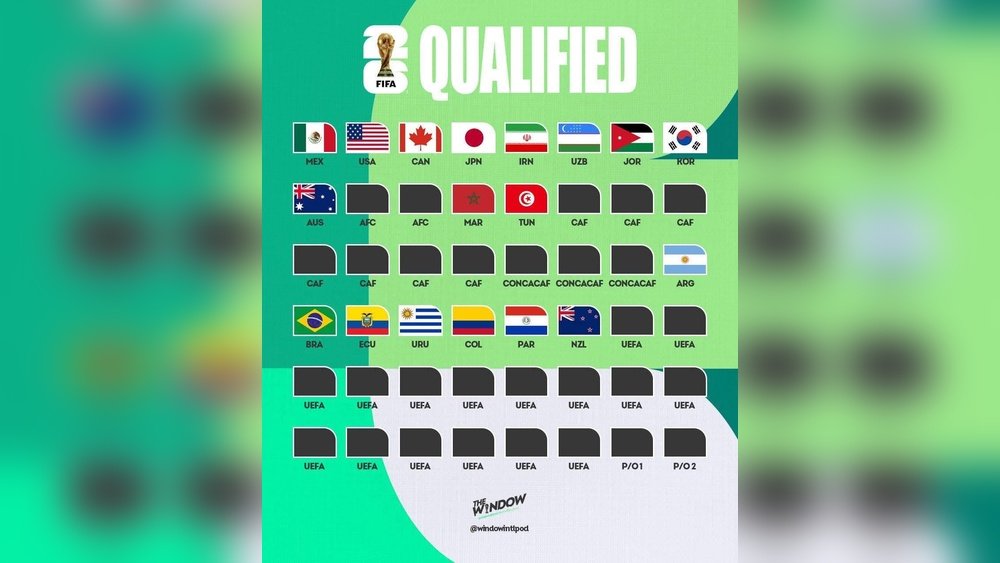
Are you curious about how many teams will compete in the FIFA World Cup 2026? This tournament is set to be the biggest yet, with more nations battling for a chance to shine on football’s grandest stage.
Whether you’re a die-hard fan or just getting into the game, knowing the number of qualifying teams and how the spots are allocated can change the way you follow the matches. Keep reading to discover how the qualification process works, which countries have a shot, and what makes this World Cup truly historic.
Your ultimate guide to FIFA World Cup 2026 starts here!
Expanded Team Lineup
The FIFA World Cup 2026 will feature an expanded team lineup, increasing the excitement and competition. This expansion allows more nations to participate and showcase their talent on the global stage. The tournament will grow from 32 to 48 teams, marking a significant change in World Cup history.
With more teams qualifying, the format will adapt to accommodate the larger pool of competitors. This change also means more matches and opportunities for fans worldwide to enjoy the tournament. The expanded lineup reflects FIFA’s goal to promote football development across all continents.
Number Of Teams Qualifying
A total of 48 teams will qualify for the 2026 FIFA World Cup. This is a 50% increase from the previous 32-team format. The larger number aims to include more countries from different regions.
Automatic Qualification For Host Nations
The tournament will be hosted jointly by the United States, Canada, and Mexico. All three host countries qualify automatically. This guarantees their participation without the need for qualification matches.
Distribution By Confederation
FIFA has allocated slots to each confederation to balance representation. UEFA (Europe) receives the most places, followed by CAF (Africa), AFC (Asia), CONCACAF (North and Central America), CONMEBOL (South America), and OFC (Oceania). Each confederation’s number reflects its football strength and growth.
Host Nations’ Automatic Spots
The host nations—United States, Canada, and Mexico—automatically qualify for the FIFA World Cup 2026. This guarantees their spots without going through qualifiers. Their automatic entry helps finalize the list of participating teams.
The FIFA World Cup 2026 will be hosted by three countries: the United States, Canada, and Mexico.
Each host nation receives an automatic spot in the tournament. This means they do not need to compete in the qualification rounds.
Automatic qualification allows the host teams to focus on preparing for the World Cup itself. It also guarantees their presence on the world stage.
United States’ Automatic Qualification
The United States is one of the host countries. Their team automatically qualifies for the 2026 World Cup.
This automatic spot allows the U.S. team to avoid the long qualifying process. They can focus on building a strong team for the tournament.
Canada’s Automatic Qualification
Canada will also take part as a host nation. They too earn an automatic spot in the World Cup.
This is a big opportunity for Canadian soccer. The team will play in the World Cup without needing to qualify.
Mexico’s Automatic Qualification
Mexico is the third host country. Like the others, Mexico automatically qualifies for the 2026 World Cup.
This ensures Mexico’s presence in the tournament. The team can prepare without the pressure of qualifying matches.
Impact On Total Qualification Spots
The three automatic spots for the host nations reduce the number of places available for other teams.
With 48 teams in total, 45 spots remain open for qualification by other countries worldwide.
This setup balances the hosts’ automatic entry with fair chances for other teams to qualify.
Qualification Slots By Confederation
The FIFA World Cup 2026 will feature a total of 48 teams. These teams earn their spots through a qualification process divided among six football confederations. Each confederation has a set number of slots based on its strength and size. The allocation aims to balance global representation and competition quality. The three host nations—United States, Canada, and Mexico—automatically qualify. The rest of the slots are distributed among other teams through regional qualifiers.
Uefa (europe) Qualification Slots
Europe receives the largest share of slots in the 2026 World Cup. UEFA will have 16 direct qualification spots. Several strong football nations will compete for these places. European teams will also have opportunities through playoff rounds. UEFA’s allocation reflects its many competitive teams and football history.
Conmebol (south America) Qualification Slots
South America has 6 direct slots for the tournament. The confederation includes football giants like Brazil and Argentina. All ten CONMEBOL teams compete in a league format. This system ensures the best teams qualify. One additional slot is available through an intercontinental playoff.
Caf (africa) Qualification Slots
Africa’s growing football talent earns it 9 direct spots. The continent’s teams face tough qualification rounds. The larger number of slots supports African football development. One more slot can be gained via intercontinental playoffs. Many African nations will have strong chances to qualify.
Afc (asia) Qualification Slots
Asia has 8 direct qualification slots in the 2026 World Cup. The continent’s large size and football growth justify this number. Teams compete in multiple qualification rounds. Asian teams also have a chance via intercontinental playoffs. The expanded slots allow more Asian countries to participate.
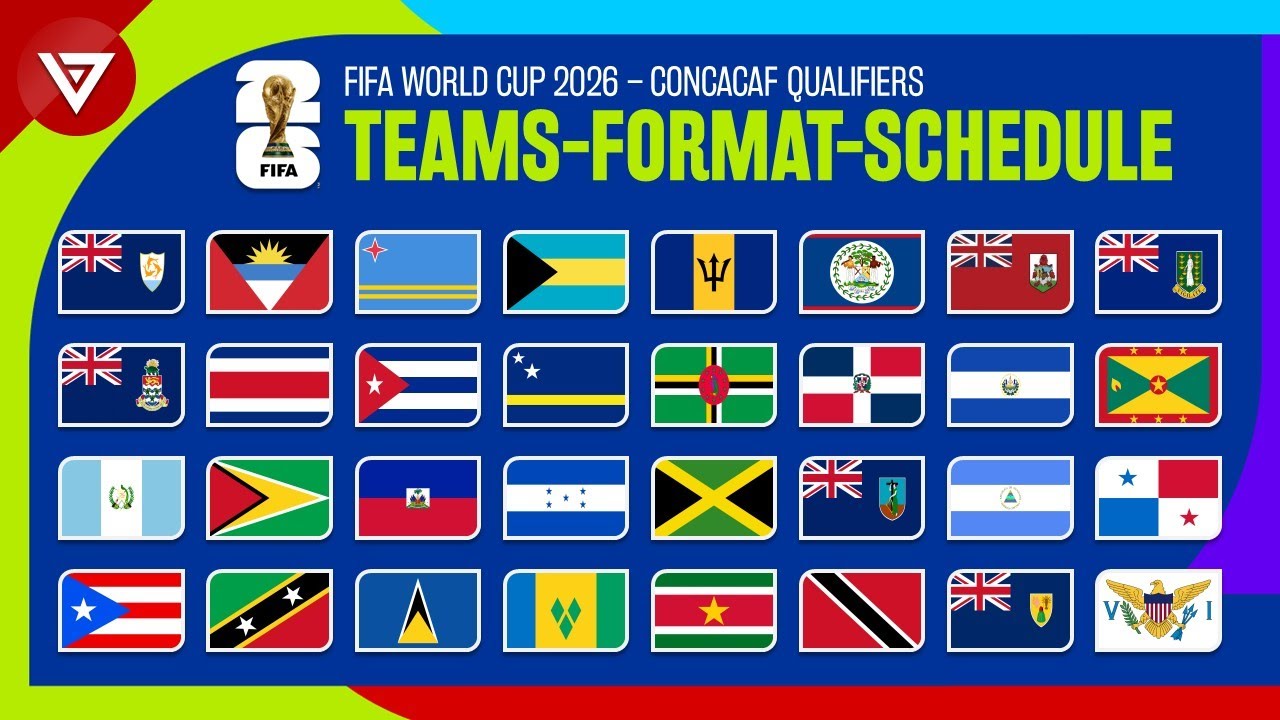
Concacaf (north, Central America, And The Caribbean) Qualification Slots
CONCACAF receives 6 direct slots. The confederation includes the three hosts who qualify automatically. This leaves three open slots for other CONCACAF teams. Qualification tournaments determine which teams earn these spots. One slot is reserved for the intercontinental playoff winner.
Ofc (oceania) Qualification Slots
Oceania has no direct slots but can qualify through playoffs. The winner of the OFC qualifiers enters the intercontinental playoff. This provides a path to the World Cup for Oceanian teams. The playoff spot keeps hopes alive for smaller football nations. Teams like New Zealand often compete hard for this chance.
Credit: www.youtube.com
Uefa Qualifying Format
Europe’s UEFA qualifying format decides which teams reach the FIFA World Cup 2026. Forty-eight teams from Europe will compete for their spots. Hosts USA, Canada, and Mexico qualify automatically, while other nations battle through group stages and playoffs.
UEFA, the European football confederation, has a clear path for World Cup 2026 qualification.
The qualification involves group stages followed by play-offs. Teams compete in groups to secure their spot.
Each group winner qualifies directly for the World Cup. This rewards consistent performance across matches.
Teams finishing second enter a play-off round. This gives more nations a chance to qualify.
The play-offs also include some of the best group runners-up and Nations League performers. This adds excitement and fairness.
In total, UEFA will have 16 direct qualifiers and 2 from play-offs. This marks an increase from previous tournaments.
The format balances competitiveness and opportunity for many European teams.
Conmebol Qualification Process
The CONMEBOL qualification process for the FIFA World Cup 2026 remains as competitive as ever. South America’s football powers battle fiercely for a limited number of spots. This confederation is known for its tough matches and passionate fans.
All ten CONMEBOL nations participate in a single league format. Each team plays home and away matches against every other team. This means a total of 18 games per team. The league format tests consistency and endurance over many months.
The top teams in the standings earn direct qualification to the World Cup. Traditionally, the top four teams qualify automatically. The fifth-placed team usually enters an intercontinental playoff for a final chance to qualify.
For World Cup 2026, the number of CONMEBOL spots has increased slightly. This change rewards the region’s competitive strength. It also adds excitement to the qualification battles.
Number Of Conmebol Teams Qualifying
CONMEBOL will have six guaranteed spots for the 2026 World Cup. This is an increase from the previous four direct slots. The fifth-placed team enters a playoff round. This means South America could send up to seven teams in total.
Format Of The Qualification Matches
The qualification matches follow a double round-robin format. Each team plays every other team twice. Once at home and once away. This ensures fairness and equal opportunities for all. The long schedule demands strong squad depth and strategy.
Playoff Opportunity For Fifth Place
The fifth-placed CONMEBOL team will compete in an intercontinental playoff. This playoff offers one additional World Cup spot. The playoff matches are high-pressure and intense. Success here means the team joins the World Cup lineup.

Credit: www.transfermarkt.com
Caf Qualification Rounds
The CAF qualification rounds decide which African teams reach the FIFA World Cup 2026. Africa will have more spots than before, thanks to the expanded tournament.
Forty-nine nations compete for nine direct places and one playoff slot. The competition will be tough and full of exciting matches.
Format Of The Caf Qualifiers
The qualification starts with teams divided into groups. Each group plays home and away matches. The group winners move on to the next stage.
In the final round, group winners face off in playoffs. Winners from these playoffs earn direct qualification to the World Cup.
Number Of African Teams Qualified
Africa will have nine direct spots in the 2026 World Cup. One additional team will enter an intercontinental playoff. This is an increase from the previous five spots.
This change gives more African nations a chance to showcase their talent on the world stage.
Impact On African Football
The expanded slots motivate teams to perform better. More countries will gain valuable experience. This can raise the level of football across the continent.
Fans can expect thrilling matches and fierce competition in the CAF qualifiers.
Afc Qualification Details
Asia will have eight direct spots for the 2026 FIFA World Cup. One more team can qualify through an intercontinental playoff. Host nations—USA, Canada, and Mexico—get automatic entry, leaving other Asian teams to compete in qualifiers.
The Asian Football Confederation (AFC) has a clear path for World Cup 2026 qualification. This cycle features more teams competing for more spots. The total AFC slots have increased due to the expanded 48-team World Cup format.
Teams must advance through multiple rounds to secure a place in the tournament. The qualification process tests every team’s skill and endurance.
First Round
The first round involves the lowest-ranked AFC teams. They play home-and-away matches in pairs. Winners move on to the second round. This stage filters teams early in the competition.
Second Round
The second round features higher-ranked teams and first-round winners. Teams are divided into groups, playing round-robin matches. Group winners and some runners-up progress to the third round. This stage is crucial for gaining momentum.
Third Round
In the third round, remaining teams compete in two groups. Each group’s top two teams qualify directly for the World Cup. This round is highly competitive and determines most AFC qualifiers.
Fourth Round And Play-offs
Teams finishing third in their groups enter the fourth round. They face off in a knockout format. The winner advances to an inter-confederation play-off. This final chance offers a route to the World Cup.
Number Of Afc Qualifiers
AFC will have eight direct qualification spots for 2026. One additional team can qualify via the inter-confederation play-off. This expands Asia’s representation on the world stage.
Concacaf Qualifying Stages
The CONCACAF qualifying stages for the FIFA World Cup 2026 are set to be intense. This region covers North America, Central America, and the Caribbean. Many teams will compete for a limited number of spots in the World Cup.
Since the tournament will be hosted by the United States, Canada, and Mexico, these three teams qualify automatically. Other nations in CONCACAF must battle through the qualifiers to earn their place.
Number Of Concacaf Teams Qualifying
CONCACAF will have six direct spots in the World Cup 2026. These places are more than in previous tournaments. The increase allows more teams from this region to compete on the world stage.
Besides the six direct qualifiers, one additional CONCACAF team can qualify through an intercontinental playoff. This gives teams a second chance to reach the World Cup.
Qualifying Format
The qualifying format has changed to fit the expanded tournament. Teams will be divided into groups. Each group will play home and away matches.
The top teams from each group will qualify directly. Some second-place teams may enter playoffs to fight for remaining spots. The competition will be fierce and exciting.
Impact Of Host Nations
The automatic qualification of the USA, Canada, and Mexico changes the qualifying dynamics. These teams will not participate in the qualifying matches. This opens opportunities for other nations to advance.
Smaller countries in the region will aim to seize this chance. The expanded World Cup slots encourage more competitive matches in CONCACAF.
Ofc Qualification Challenges
The Oceania Football Confederation (OFC) faces tough challenges in the FIFA World Cup 2026 qualification. Only one direct spot is available for OFC teams, making competition fierce. Teams from small island nations must overcome travel issues and limited resources. This limits their chances to compete on a global stage.
OFC qualification also involves a long process with several rounds. Many teams are knocked out early in the competition. The best OFC team earns a place in the intercontinental playoffs, not a direct World Cup spot. This makes the path to the World Cup even harder for Oceanian teams.
Limited Direct Qualification Spots
OFC has just one direct qualification place for the 2026 World Cup. This is fewer than other confederations. Many strong teams compete for this single spot. It creates a high level of competition among Oceanian countries.
Travel And Logistical Challenges
OFC teams often face long flights and costly travel. Small islands have limited infrastructure for training and matches. These factors affect team preparation and performance. The distances between islands increase fatigue and reduce recovery time.
Intercontinental Playoff Pressure
The OFC winner must play an intercontinental playoff to reach the World Cup. This playoff is against a team from another confederation. It adds more pressure and difficulty. Winning the OFC alone does not guarantee World Cup qualification.
Early Elimination Of Many Teams
Several OFC teams exit qualification in early rounds. Countries like Fiji, Solomon Islands, and Tahiti often struggle. This narrows the competition to a few strong teams. Early exits limit exposure and experience for smaller nations.
Playoff System Explained
The FIFA World Cup 2026 will feature 48 teams, including host nations who qualify automatically. Other countries compete in regional play-offs to earn their spot in the tournament. This new format increases competition and excitement across all confederations.
The FIFA World Cup 2026 will feature 48 teams. This is an increase from previous tournaments. To fill the last spots, a playoff system decides who qualifies.
The playoff system gives teams a final chance to reach the World Cup. It includes teams that did not qualify directly through their regional groups.
How Teams Enter The Playoffs
Each football confederation has its own qualification path. The best teams qualify directly. Teams that finish just outside direct qualification enter the playoffs.
Six teams will compete in the playoff tournament. These include one team from each confederation except UEFA, plus one extra from the host confederations.
Format Of The Playoff Tournament
The playoff tournament has two rounds. First, four teams play knockout matches. The winners join two seeded teams in the final round.
The last two winners from the final round secure the final two World Cup spots. This system adds excitement and opportunity.
Role Of Host Nations In Playoffs
The United States, Canada, and Mexico host the 2026 World Cup. All three qualify automatically. Their spots do not affect playoff places.
This means other confederations have fair chances in the playoffs. The host nations focus on preparing for the main event.
Teams Missing Direct Qualification
The FIFA World Cup 2026 will feature 48 teams, an increase from previous tournaments. This expansion means more nations have a chance to compete. Despite this, several strong teams will miss out on direct qualification. These teams must try harder in play-offs or other routes.
Host countries—United States, Canada, and Mexico—automatically qualify. Other nations face tough battles in their confederation qualifiers. Many traditional football powers will not secure direct spots and will rely on secondary chances.
Uefa Teams Missing Direct Qualification
In Europe, big names like Italy, Greece, Serbia, Wales, and Ukraine have failed to qualify directly. They must enter the play-off rounds to keep their World Cup hopes alive. This shows the growing competition level in UEFA.
Conmebol Teams Missing Direct Qualification
South American qualifiers are brutal. Chile, Peru, and Venezuela could not secure direct qualification spots. These teams will seek other opportunities, but their path is difficult with limited play-off places.
Caf Teams Missing Direct Qualification
Africa’s qualifiers saw Nigeria, Cameroon, and Congo eliminated from direct qualification. Congo faced extra challenges due to FIFA suspensions affecting match outcomes. These teams must fight in later rounds to reach the finals.
Ofc Teams Missing Direct Qualification
Oceania has many teams eliminated early, including Fiji, Solomon Islands, and Tahiti. The region’s limited spots make direct qualification very challenging. Most of these teams are out of contention for the main tournament.
Concacaf Teams Missing Direct Qualification
In North and Central America, teams such as Anguilla, Aruba, and Cuba did not qualify directly. Though the hosts are in, many smaller nations face early exits. Their journey to the World Cup remains very tough.
Afc Teams Missing Direct Qualification
Asia saw some surprising results with China eliminated from the qualifiers. Other teams also failed to secure direct spots. This increases pressure on Asian teams to perform in upcoming play-offs.
Disqualified Or Withdrew Teams
Russia remains suspended indefinitely from FIFA and UEFA events. Eritrea withdrew from the qualification process. These actions removed them from any chance of competing in 2026.
Disqualified And Withdrawn Teams
The FIFA World Cup 2026 will showcase 48 teams from around the world. While many teams compete hard to earn their spot, some face disqualification or choose to withdraw. These changes affect the final list of participants.
Disqualifications happen for various reasons, including rule violations and suspensions. Withdrawals may occur due to political issues or financial problems. Both impact the qualification process and the tournament’s lineup.
Disqualified Teams
Russia is the most notable disqualified team for 2026. FIFA and UEFA suspended them indefinitely due to political conflicts. This suspension removes Russia from all international competitions, including World Cup qualifiers.
Other teams have faced temporary suspensions or bans for administrative problems. These actions ensure fair play and adherence to FIFA regulations. Such disqualifications open spots for other countries to advance.
Withdrawn Teams
Some teams withdrew voluntarily from the qualification rounds. Eritrea is a key example, pulling out due to internal challenges. Withdrawals reduce competition in certain regions and simplify the path for remaining teams.
Withdrawals can result from safety concerns, funding issues, or political unrest. These decisions affect the balance of qualifying groups and sometimes lead to automatic advancement for others.
Impact Of Expanded Format On Smaller Nations
The expanded format allows more smaller nations to join the FIFA World Cup 2026. This boosts their chances to compete on a global stage. Increased spots bring new opportunities and wider representation in the tournament.
The FIFA World Cup 2026 will feature 48 teams, up from 32. This expansion opens doors for many smaller nations. More teams mean more chances to compete on the world stage. Smaller countries can gain valuable experience and exposure.
These nations often face tough competition in qualifiers. The new format reduces barriers and increases participation. It gives hope to teams that rarely qualify under the old system.
Increased Opportunities For Qualification
With 16 extra slots, confederations receive more berths. Smaller football nations get direct entry without tough playoffs. This allows them to plan better for the tournament. It also motivates investment in local football programs.
More teams mean a more diverse World Cup. Fans worldwide see fresh faces and new styles of play. This diversity enriches the tournament and global football culture.
Boost To Football Development
Qualification boosts football interest in smaller countries. It encourages youth participation and infrastructure growth. Governments and sponsors may invest more in sports facilities. This helps raise the level of football over time.
Playing in the World Cup inspires future generations. It creates role models and builds national pride. Smaller nations gain confidence and improve their skills.
Challenges For Smaller Teams
The expanded World Cup brings challenges too. Smaller teams may face stronger opponents early on. They need to prepare well to compete effectively. Travel and logistics for many new teams can be complex.
Despite challenges, the overall impact is positive. The experience and exposure outweigh the difficulties. Smaller nations stand to benefit greatly from this change.
Fifa’s Role In Qualification Changes
FIFA plays a key role in shaping World Cup qualification rules. The 2026 tournament will see major changes. FIFA expanded the tournament to 48 teams. This affects how many teams qualify from each region.
FIFA works with continental confederations to set qualification formats. They aim for fair chances for all countries. FIFA also handles automatic qualification for host nations. For 2026, the United States, Canada, and Mexico qualify automatically. This is a first in World Cup history.
Fifa’s Expansion Of The World Cup
FIFA increased the number of teams from 32 to 48. This allows more countries to compete. More teams mean more matches and more excitement. FIFA designed new qualification paths to include more nations.
Automatic Qualification For Host Nations
Three countries will co-host in 2026. All three—United States, Canada, and Mexico—qualify automatically. FIFA confirmed this policy to support host nations. This avoids them having to compete in qualifiers.
Collaboration With Continental Confederations
FIFA works closely with six confederations. Each confederation runs its own qualifiers under FIFA rules. FIFA ensures balance in team allocation to each region. This cooperation helps keep the competition fair and global.
Introduction Of New Qualification Formats
FIFA introduced new formats for qualifying matches. The goal is to give more teams a chance. Playoffs and group stages have changed. FIFA monitors the process to improve competitiveness and fairness.
Future World Cup Qualification Trends
The FIFA World Cup 2026 will mark a significant change in the number of teams participating. The tournament is expanding from 32 to 48 teams. This expansion will affect how teams qualify and the overall competition format. Understanding future World Cup qualification trends helps fans and teams prepare for this new era.
More teams mean more chances for countries to compete on football’s biggest stage. It also introduces new challenges for confederations and organizers. The qualification process will become more diverse and competitive. This section explores key trends shaping future qualifications.
Increased Number Of Participating Teams
The World Cup 2026 will feature 48 teams, up from 32. This is the first time in history that so many teams will qualify. The increase aims to include more nations from different regions. It offers smaller football countries a better chance to join the tournament. This change will make the World Cup more global and inclusive.
Automatic Qualification For Host Nations
Three countries will host the 2026 World Cup: the United States, Canada, and Mexico. All three will qualify automatically. This is a new development since usually only one host nation qualifies automatically. It reduces the available spots for other teams in the region. This trend shows how joint hosting affects qualification rules.
Changes In Confederation Slot Allocation
FIFA has adjusted the number of slots given to each continental confederation. Asia, Africa, and North America will gain more spots. Europe will also see a slight increase in teams. South America and Oceania will have more opportunities too. This shift aims to balance global football development and competition.
Introduction Of Intercontinental Play-offs
A new play-off tournament will decide the last few spots in the World Cup. Six teams from different confederations will compete for three final places. This format increases excitement and fairness in qualification. Teams that narrowly miss direct qualification get a second chance. It also promotes competitive matches before the main event.
Credit: bleacherreport.com
Frequently Asked Questions
How Many Teams Qualify For The 2026 World Cup?
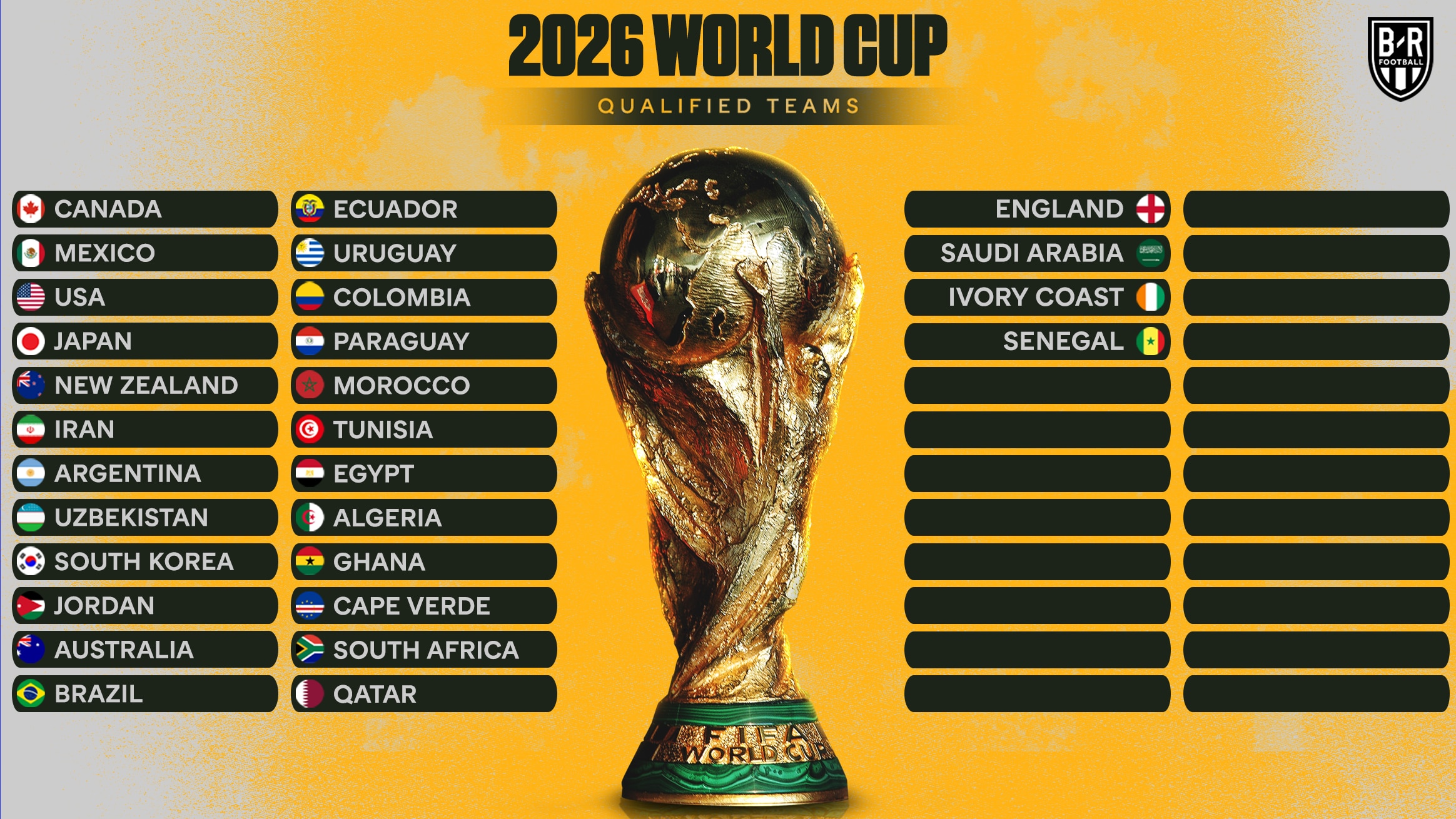
The 2026 World Cup will feature 48 teams. Three host nations—USA, Canada, and Mexico—qualify automatically. The remaining 45 teams qualify through regional competitions.
Who Has Not Qualified For The World Cup 2026?
Italy, Chile, Nigeria, Cameroon, Greece, Serbia, Wales, Ukraine, Peru, Venezuela, China, and several Oceanian and CONCACAF teams have not qualified for World Cup 2026. Russia remains suspended, and Eritrea withdrew from qualifying. Host nations USA, Canada, and Mexico qualify automatically.
Will The 2026 World Cup Have 48 Teams?
Yes, the 2026 World Cup will feature 48 teams. It expands from the previous 32-team format. The tournament will be hosted by the United States, Canada, and Mexico. This increase allows more countries to participate and boosts global football competition.
Do Host Countries Automatically Qualify?
Host countries automatically qualify for the tournament. The United States, Canada, and Mexico secured their spots as hosts. Other nations must compete in qualifiers.
How Many Teams Will Qualify For Fifa World Cup 2026?
A total of 48 teams will qualify for the FIFA World Cup 2026, expanding from 32 teams.
Which Countries Automatically Qualify As Hosts For 2026 World Cup?
The United States, Canada, and Mexico automatically qualify as co-host nations for 2026.
How Is The Qualification Process Structured For Fifa World Cup 2026?
Teams compete in their continental confederations’ qualifiers to earn spots in the World Cup.
Conclusion
The FIFA World Cup 2026 will feature 48 teams competing for glory. Three host nations—United States, Canada, and Mexico—qualify automatically. Other countries will battle through qualifiers in their regions. This expansion allows more nations to join the global stage. Fans worldwide can expect exciting matches and diverse teams.
The tournament promises to be a grand celebration of football talent. Stay tuned as the qualifying races heat up and teams secure their spots. The road to the World Cup is set to be thrilling and full of surprises.